Friends Fonts Embroidery Design
A Craft Fair Designer’s Real-World Review Before Booth Day
As an embroidery designer who’s stitched over 300 craft fair products in the past three years—from school-themed tote bags for PTA fundraisers to personalized aprons for boutique coffee shops—I opened Friends Fonts Embroidery Design with high hopes and zero patience for “cute but unworkable.” This isn’t just another digital embroidery file. It’s a personality-driven font built for connection—and that changes everything on the sales floor.
First Impression: Warm, Modern, and Instantly Relatable
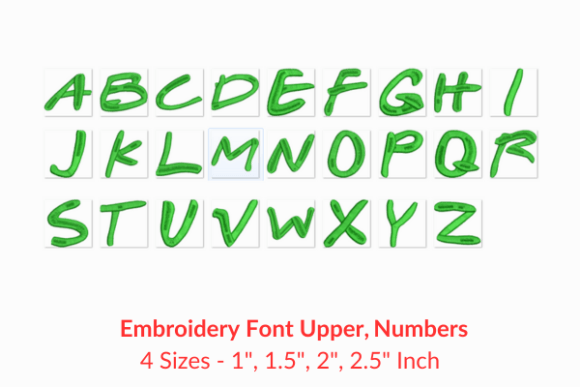
Friends Fonts Embroidery Design lands somewhere between friendly modern and softly handwritten—think thoughtful handwriting with clean line weight and balanced spacing, not overly scripty or cartoonish. It avoids the twee trap many “school” category fonts fall into. That’s critical: at a crowded craft fair, customers don’t pause for decipherable cursive—they gravitate toward clarity, charm, and emotional resonance. This font feels like a warm greeting, not a homework assignment. It reads as handmade, not mass-produced—even before you stitch it.
Where It Shines (and Sells) on Real Craft Fair Products
This embroidery font thrives where personalization meets everyday utility:
- Tote bag design: Centered across the front of a natural canvas tote? Perfect. The letterforms hold presence at 4–5 inches wide without looking cramped or thin.
- Apron embroidery: Left chest placement (2.5"–3" tall) gives instant charm—especially on denim or linen aprons sold at food markets or maker fairs.
- Tea towel embroidery: Works beautifully along the hem or corner. Its even stroke weight reads clearly against textured cotton terry—even when viewed from across a booth aisle.
- Embroidered patch: At 2" height, it retains legibility and softness. Ideal for sew-on or iron-on patches sold as add-ons or gift sets.
- Fabric pouches & pillow covers: Small-scale applications (1.75"–2.25") feel intentional—not like afterthoughts. Customers consistently pick up items with subtle, confident lettering.
It’s less effective on curved cap surfaces unless scaled up and simplified (more on that below), and it doesn’t dominate oversized market bags the way bold block fonts do—but that’s intentional. Friends Fonts Embroidery Design is about intimacy, not volume.
What Makes It Booth-Ready (and Etsy-Listings-Ready)
Here’s why this machine embroidery design converts:
- At-a-glance readability: No squinting. No “What does that say?” moments. That’s rare in script-based embroidery files.
- Photogenic consistency: Photographs cleanly on light and medium fabrics—no fuzzy edges or thread pooling in online listings. A major win for Etsy sellers juggling 20+ product photos per week.
- Batch-friendly rhythm: Spacing and kerning are forgiving across names, dates, and short quotes—meaning fewer manual tweaks per customer order. That saves real time during craft fair prep.
- Value perception boost: Hand-stitched-looking lettering elevates simple cotton tea towels or canvas pouches into giftable handmade products. Buyers describe them as “thoughtful,” “special,” and “uniquely mine.”
Careful-Use Notes: Protect Your Stitch Quality & Reputation
Even great embroidery files demand respect for fabric and physics. Friends Fonts Embroidery Design performs best when you anticipate these realities:
- Avoid ultra-small applications: Below 1.5" height, fine interior curves may collapse or lose definition—especially on thick or napped fabrics.
- Watch dense stitch areas: Tight loops and overlapping strokes can build heat and tension. Use lightweight cutaway stabilizer on knits or stretchy fabrics.
- Dark fabric contrast matters: Light thread (ecru, soft white, heather gray) reads beautifully—but avoid pale yellow or peach on navy or charcoal unless you’ve tested thread opacity first.
- Texture is your co-designer: On heavily textured tea towels or burlap, consider slightly increasing letter height (by 10–15%) to maintain visual weight.
- Cap embroidery needs simplification: The natural curve distorts fine joins. For commercial embroidery on structured caps, reduce complexity or choose alternate letterforms if available in the file set.
How It Strengthens Your Entire Booth Presence
Friends Fonts Embroidery Design doesn’t just sit on products—it connects them. When your tote bags, aprons, and patches all share the same cohesive voice, your booth reads as intentional, curated, and trustworthy. Customers notice the consistency before they notice the price. It supports brand storytelling without needing logos or slogans—just warmth, clarity, and craftsmanship.
More importantly, it invites engagement. “Is that my name?” “Can you do ‘best friends since 2018’?” “Do you have this in blue?” That’s the sound of sales beginning—not from signage, but from stitch-led curiosity.
Must-Do Designer Prep Steps (Non-Negotiable)
Before stitching your first craft fair product, do this:
- Test the embroidery file on scrap fabric matching your final product (e.g., tea towel terry, canvas tote weight).
- Check thread contrast under both daylight and booth lighting—some colors shift dramatically.
- Review spacing between letters—especially for longer names. Adjust tracking if needed; don’t assume auto-kerning fits every word.
- Confirm hoop size compatibility with your machine and intended product placement (e.g., left chest on aprons often requires 4"x4" max).
- Inspect stitch density visually—not just on screen. High density + thick fabric = puckering risk.
- Use appropriate stabilizer: tear-away for stable wovens, cutaway for knits or textured weaves.
- Create at least one real mockup—not just a printable mockup—to assess drape, texture interaction, and perceived value.
- Compare how the design reads across 2–3 fabric colors (cream, navy, olive) before committing to full production.
- Verify commercial licensing terms—this is essential for any small shop product sold beyond personal use.
Friends Fonts Embroidery Design won’t carry your entire booth—but it will elevate every piece it touches. It’s the quiet confidence behind your most giftable handmade product, the detail that makes customers pause, smile, and reach for their wallet. In the School and Embroidery category, that kind of emotional precision is rare. And in craft fairs? It’s pure gold.