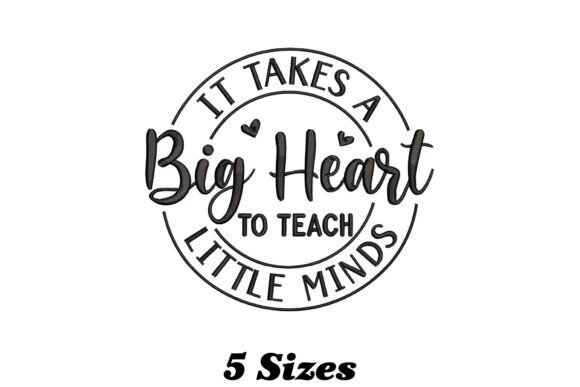
Little Minds: A Smart Embroidery Choice for Small Business Branding
As an embroidery designer who’s developed and tested hundreds of machine embroidery designs for small businesses—from indie bakeries to boutique florists and creative studios—I approached Little Minds with both curiosity and critical intent. Its School category and playful description (“a charming update… fun and quirky flair”) immediately signal a design that leans into warmth and approachability—but does it deliver *business-ready* versatility? Let’s break it down—not as decoration, but as functional brand infrastructure.
First Impression: Friendly, Not Frivolous
Little Minds lands as intentionally friendly—neither overly cutesy nor sterile. The title evokes curiosity, growth, and gentle intelligence, making it ideal for brands rooted in education, creativity, wellness, or community care. It feels handmade but polished; whimsical but not childish. That balance is rare—and valuable. For a small business merch strategy, this tone supports trust without sacrificing personality. Whether stitched on a café apron or a pet brand tote bag, Little Minds reads as thoughtful, inclusive, and quietly confident—not just “cute.”
Real-World Performance Across Merch Channels
In commercial embroidery, a design must earn its place across multiple touchpoints. Here’s how Little Minds holds up:
- Embroidered patch: Excellent candidate for woven or chenille-style patches—its clean outlines and balanced negative space translate well at 2”–3” sizes. Ideal for attaching to staff uniforms, reusable tote bags, or product packaging accents.
- Apron embroidery & cap embroidery: Works beautifully on chest pockets and front panels when sized appropriately (1.75”–2.25”). Its moderate stitch density avoids stiffness on cotton twill or denim, keeping comfort intact for daily wear.
- Tote bag design & custom apparel: Stands out on natural canvas or unbleached cotton without overwhelming the fabric. The “quirky flair” shines here—not as background noise, but as a memorable brand signature.
- Boutique merchandise & customer gifts: Adds handmade authenticity to tea towels, ceramic sleeve wraps, or linen pouches. Paired with neutral thread colors, it elevates perceived value without shouting.
- Printable mockup & digital embroidery file use: Scales cleanly for client presentations. Its visual clarity makes it easy to preview on Etsy listings, Shopify banners, or wholesale pitch decks.
Where to Use Little Minds With Intention
No design is universally bulletproof—and Little Minds is no exception. Use caution in these scenarios:
- Cap fronts under 1.5”: Fine detail may blur. Always test at target size before digitizing for curved surfaces.
- Dark uniforms or textured fabric: Review thread color contrast closely. A light ecru or soft grey may read better than stark white on charcoal twill.
- Frequent-wash items (e.g., staff work shirts): Confirm stabilizer pairing—lightweight cutaway works best for longevity without bulk.
- Small patch sizes (<1.25”): Simplified versions may be needed. Don’t assume the base embroidery file auto-scales well—verify legibility of any lettering or fine elements.
Brand Identity Impact: More Than Just Stitching
For small businesses, every embroidered element reinforces brand identity—or undermines it. Little Minds strengthens recognition by offering consistent visual rhythm: it’s recognizable at glance, scalable across formats, and emotionally resonant without being prescriptive. Customers don’t just see a logo—they sense intention. That builds trust faster than a slogan ever could.
It also supports visual consistency across your design assets. When paired with a simple wordmark or minimalist typography, Little Minds becomes a flexible anchor—equally at home beside hand-drawn illustrations or clean sans-serif type. And because it avoids dated trends (no gradients, no excessive flourishes), it won’t date your merch lineup in six months.
Practical Designer Notes for Production
Before you load the embroidery file into your machine or send it to a production partner, run through these essentials:
- Test in black and white first—assess contrast, spacing, and balance without color distraction.
- Check how it renders at your smallest intended patch size. Does the shape hold? Do internal details stay legible?
- Review thread color options against your core fabric palette—not just on screen, but on swatches.
- Inspect spacing between elements. Tight kerning or overlapping shapes can cause nesting issues in dense stitching.
- Confirm hoop size compatibility with your most-used frames—especially if using multi-position setups for caps or sleeves.
- Always test on your actual production fabric. A design that looks perfect on linen may float or pucker on terry cloth.
- Choose stabilizer based on fabric texture and end-use: tear-away for stable wovens, cutaway for knits or high-wear items.
- Create a printable mockup for client approval—especially important for Etsy sellers or wholesale buyers reviewing digital embroidery files remotely.
- Compare Little Minds beside your other design assets. Does it complement—or compete with—your primary logo or icon system?
- Verify commercial licensing before use. While described as a machine embroidery design for t-shirts and home decor, confirm rights extend to resale, branded patches, and small business merch.
Final Thought: A Design That Grows With Your Business
Little Minds isn’t just another embroidery file—it’s a quiet brand amplifier. It bridges playfulness and professionalism, handmade charm and commercial reliability. For schools, studios, cafés, crafters, and local makers building authentic connections, it offers flexibility without compromise. Used thoughtfully, it becomes part of your story—not just your stitching.
Whether you’re launching your first line of custom apparel or refreshing your shop’s entire embroidered ecosystem, Little Minds earns its place—not as filler, but as foundation.